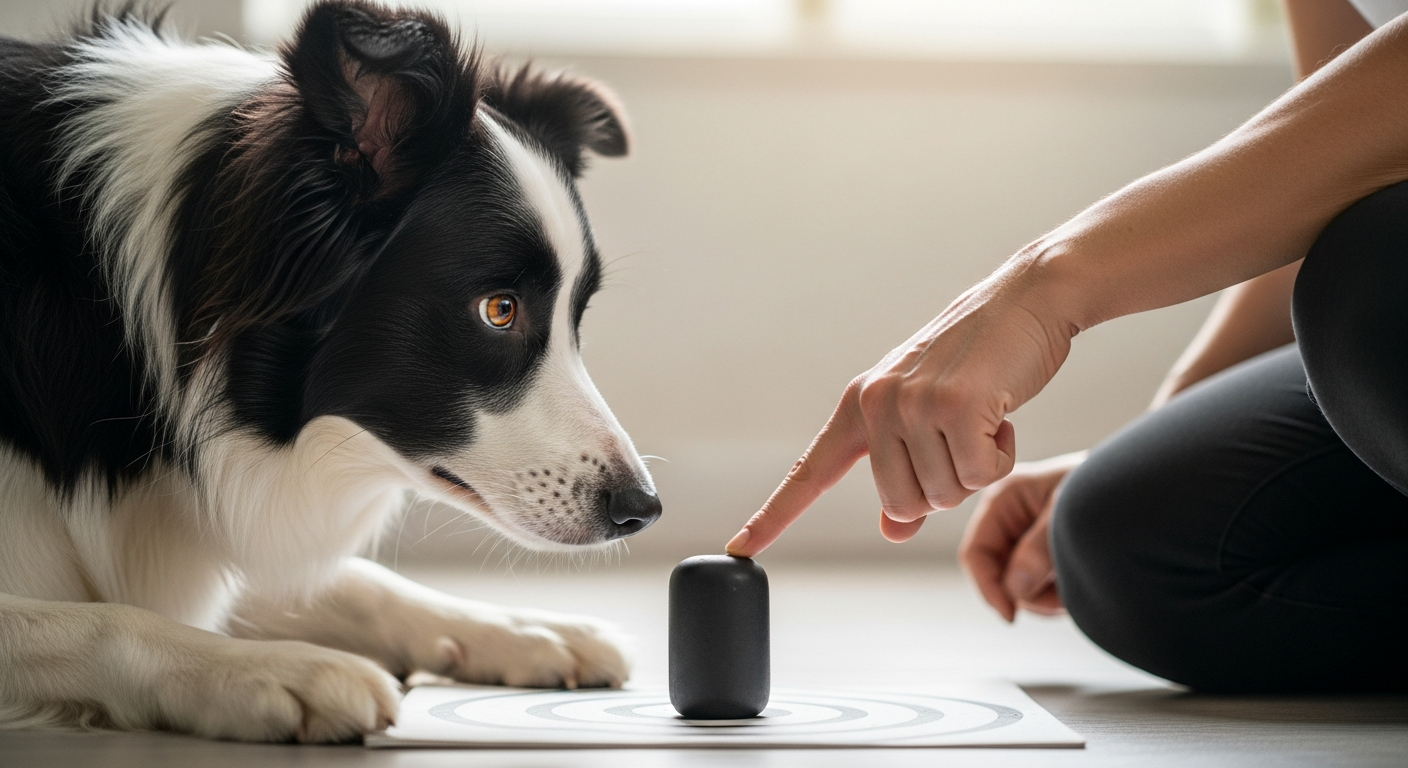
Border Collies are capable of extraordinary learning feats. The late Chaser, a Border Collie studied for a decade at Wofford College, demonstrated a receptive vocabulary of more than 1,000 object names. Yet anyone who has trained the breed seriously knows that intelligence does not translate automatically into easy learning. A Border Collie that sparkles through one training method can stall completely when the same information is presented differently. Understanding individual learning styles is one of the most practical skills a Border Collie owner can develop.
The Three Primary Learning Modes
Research into canine cognition, particularly the work coming out of the Duke Canine Cognition Center and the Wolf Science Center at the University of Veterinary Medicine Vienna, suggests dogs rely on three primary learning channels: observational, associative, and operant. Border Collies, due to centuries of selection for handler responsiveness and environmental reading, tend to use observational learning more heavily than other breeds.
Observational Learning
A Border Collie watches. They watch the handler, other dogs, livestock, and the environment, and they learn from what they see even when no formal training is occurring. A puppy raised near an experienced adult stockdog picks up core herding behaviors without explicit instruction. A pet Border Collie learns the morning routine of the household by watching, and often anticipates the next step before the human does.
Training approaches that exploit observational learning, such as model-rival training or allowing young dogs to watch experienced demonstrations, often produce faster skill acquisition in Border Collies than in breeds that rely primarily on direct reinforcement.
Associative Learning
Associative learning links environmental cues to outcomes. A Border Collie learns that the sound of the leash means walks, that the grooming table means being handled, that specific handler postures predict specific tasks. This channel is universal across dogs but Border Collies form associations faster and retain them longer than most breeds, which makes early and careful conditioning especially important. The dog is learning whether you are training or not.
Operant Learning
Operant learning is the direct consequence-based channel that formal training protocols use: behavior produces outcome, outcome shapes future behavior. This is the domain of clicker training, shaping, and traditional obedience protocols. Border Collies excel here when the reinforcement schedule is rich and the criteria are clear, but they are also known to rapidly extinguish behaviors that stop paying off, which is why intermittent reinforcement is often introduced carefully.
Individual Variation Within the Breed
Breed-level tendencies do not predict individual behavior. Within any litter, some Border Collies will show a strong preference for one learning channel while their littermates favor another. Four patterns appear consistently across working, sport, and pet populations:
The Observer
Learns fastest by watching. Prefers to see a skill demonstrated before attempting it. Often shows a "thinking" pause before performing. Reinforcement schedules can be leaner because the dog is computing rather than guessing.
The Experimenter
Learns fastest by trying behaviors and seeing what pays. Shapes beautifully from a clicker. Needs a rich reinforcement schedule early on. Can become frustrated by rigid lure-reward patterns.
The Handler-Focused Dog
Learns by reading handler body language and energy. Responds to subtle cues. Can struggle in training environments with multiple handlers or inconsistent signals.
The Environment Reader
Learns by tracking environmental patterns. Often classified as "difficult" because they generalize poorly without careful proofing across contexts. Needs systematic location, surface, and distraction variation.
Identifying which pattern best describes your dog is the single most productive training decision you can make. Our article on teaching complex commands explores how to adapt sequential training to different styles.
Diagnosing Your Dog's Primary Style
A simple structured observation over three short training sessions reveals most Border Collies' primary style.
Three-Session Assessment
- Session 1 — Shape a new behavior: Put a box on the ground and reinforce any interaction. Does the dog offer behaviors freely (experimenter) or pause and watch you (observer)?
- Session 2 — Teach by demonstration: Perform the behavior yourself (step into the box). Does the dog immediately mirror you (observer) or remain confused (experimenter)?
- Session 3 — Cue with body posture: Without speaking, use clear body language to indicate a trained behavior. Does the dog respond reliably (handler-focused) or require a verbal cue (others)?
Most Border Collies show a clear primary and a secondary style. A dog that is clearly an observer with handler-focused secondary tendencies will respond best to demonstration-based training with strong handler clarity. A pure experimenter will do best with high-rate shaping and clicker precision.
Matching Method to Style
For Observers
Use demonstration first, reinforcement second. Perform skills slowly and clearly before asking the dog to attempt. Include longer pauses between repetitions, allowing the dog to process. Reduce the reinforcement rate sooner than you would for other styles; observers find the learning itself rewarding.
For Experimenters
Use free-shaping with a high rate of reinforcement in short 1-to-2 minute sessions. Allow the dog to offer behavior without lures. Capture unexpected behaviors and add cues later. Introduce intermittent reinforcement carefully to preserve motivation.
For Handler-Focused Dogs
Invest heavily in body language precision. Video yourself and watch for ambiguous cues. Keep training teams small and consistent. When multiple handlers will work the dog, explicitly align on cue delivery.
For Environment Readers
Proof every behavior across multiple locations, surfaces, and distraction levels before considering it learned. Expect regressions when context shifts. Plan the training calendar around systematic generalization rather than assuming it will happen automatically.
Errors That Cross Styles
A few mistakes reliably reduce Border Collie learning regardless of style.
Universal Training Errors
- Sessions that run too long (more than 5 to 7 minutes at a stretch for most dogs)
- Unclear criteria that change within a session
- Using punishment to suppress offered behavior in a shaping context
- Training when the dog is physically or cognitively fatigued
- Introducing new distractions before the behavior is fluent in low-distraction contexts
Learning and Emotional State
A Border Collie that is emotionally overwhelmed cannot learn efficiently regardless of style. High arousal narrows cognitive bandwidth, which is why experienced trainers emphasize calm focus as the pre-condition for any training session. Signs that arousal is too high include shallow breathing, wide eyes, stiff body, frantic behavior offering, and inability to take food. When these appear, stop the session and return to a simpler activity or rest.
The same principle applies to understimulated dogs. A Border Collie that has spent the day bored often enters training sessions with desperate energy that blocks learning. For dogs showing this pattern, short exercise and cognitive warm-ups before formal training significantly improve focus. Our article on mental stimulation for Border Collies offers specific warm-up protocols.
Tracking Progress
Learning style observation benefits from simple documentation. A weekly log of behaviors taught, sessions per day, success rates at each criterion, and generalization contexts reveals patterns the eye misses. The dog that seems to "not get it" often turns out to be progressing steadily but more slowly than assumed.
Over months, the log also reveals which methods generate the fastest retention and which behaviors persist through stressors. These insights transfer across every future skill you train.
The Broader Picture
Border Collies are not uniform dogs. The breed produces individuals that range from intensely environmental to deeply handler-focused, from frantic experimenters to patient observers. Matching training approach to individual learning style respects the dog as the unique animal they are and produces results dramatically faster than forcing a single method.
For a deeper exploration of the cognitive science behind the breed, our article on Border Collie intelligence covers the research that frames these learning-style patterns within the broader literature on canine cognition.